
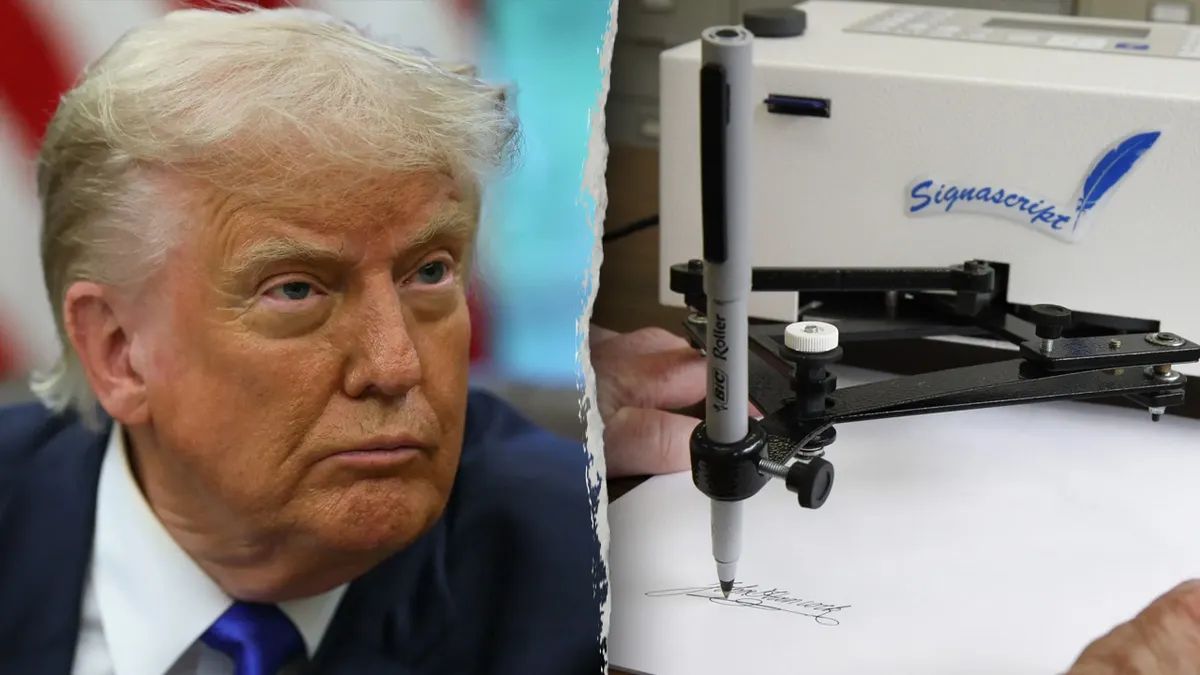
What is Autopen?
The Autopen is a mechanical device that can replicate a person’s handwritten signature automatically. Essentially, the individual’s original signature is digitized and stored in the machine; when needed, a robotic arm or mechanical pen reproduces that signature onto documents. This allows busy public figures (politicians, executives, celebrities) to sign many documents quickly without manually writing each one.
Historically, autopens were developed to save time and administrative burden. Over decades, they have been used by various public and private figures in contexts where large volumes of signature-required documents must be processed.
Why Autopen Was Acceptable — And Pragmatic
In many institutions, the use of autopen is seen as a practical shortcut rather than a threat. For example:
- When workload is high and decisions or communications are routine (e.g. form letters, approvals, non-controversial directives), autopen eases administrative burden without substantially compromising efficiency or governance.
- Because the signature is originally authorized by the person (i.e. their real handwriting is digitally stored), the resulting autopen-produced documents have — in many contexts — been considered legally valid when used properly and under consent.In other words: autopen has long been seen as a legitimate and useful tool — when used transparently and with the signer’s intent.
Why Autopen Has Become Politically Controversial
Recently, the autopen has emerged as a political flashpoint — especially in the context of high-stakes decisions such as executive orders and presidential pardons. The controversy centers on several concerns:
Critics argue that using autopen for major decisions (rather than minor correspondence) can undermine accountability. If a signature is mechanically replicated, it raises the question: Did the person truly review and approve every document?With claims about declining cognitive capacity or lack of direct oversight, opponents say heavy reliance on autopen — especially for consequential documents — could erode trust and transparency. - There’s concern that autopen use can be exploited, intentionally or otherwise, to bypass the traditional safeguards: physical presence, personal review, manual signing. When that happens, critics view autopen as less a convenience than a symbolic mask of authority.
- In short: the more autopen is used for critical decisions — rather than routine paperwork — the more people question its legitimacy.
Recent Events: Autopen in the Spotlight
The debate around autopen intensified recently when allegations surfaced that Joe Biden used an autopen to sign a number of significant executive documents, including pardons and other directives. - Supporters of this claim — including Donald Trump and some political allies — argue that documents signed via autopen should be considered invalid or at least subject to stricter scrutiny. They claim such use undermines the notion of personal responsibility and executive accountability, especially if the individual’s health or attentiveness is in question
- On the other hand, many legal experts and long-time users of autopen point out that this device has been used by presidents and officials for decades — often without controversy — to handle routine paperwork, correspondence, and non-binding decisions.According to those defenders, the mere use of autopen does not automatically strip a document of its legitimacy; what matters is whether the user directed its use knowingly and consented to the outcome.
- The Core Questions: Efficiency vs. Authenticity and Accountability
The autopen conflict shines a spotlight on deeper issues about governance and decision-making in modern administrations:
Is convenience acceptable when it comes to consequential decisions? Autopen offers speed and efficiency — especially useful when time or logistics make physical signing impractical. But does that efficiency come at the cost of personal oversight?
Can a mechanical signature carry the same weight as a handwritten one? Legally, many jurisdictions treat autopen signatures as valid with proper authorization, yet some argue the symbolic value — the act of personally signing — carries moral and institutional weight.
How do we ensure transparency and trust when actions are automated? When autopen is used extensively for important matters, observers demand clear documentation of who authorized what, and whether the person whose signature appears truly reviewed the content.
This tension between administrative practicality and democratic accountability is central to today’s autopen debate.
Final Thoughts: Autopen Is a Tool — Its Legitimacy Depends on Use
The Autopen is neither inherently good nor bad. It is a tool — and like any tool, its value and risks depend on how it’s used.
When used judiciously for routine or non-critical tasks, autopen remains a valuable administrative aid. But when deployed for high-stakes decisions — pardons, executive orders, major policy changes — it raises serious questions about accountability, oversight, and trust.
In the current political climate, where legitimacy and transparency are under heightened scrutiny, autopen’s use must be accompanied by clear, documented consent and disclosure. Without that, even a long-accepted administrative practice risks being reinterpreted as a symbol of opacity or executive overreach.
For readers and citizens, the autopen debate offers a broader lesson: in modern governance, technology can simplify bureaucracy — but preserving accountability, authenticity, and trust often requires resisting purely mechanical efficiency.